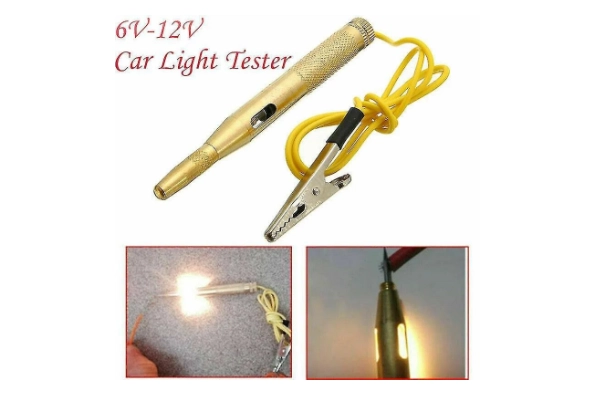
The Essential “First-Step” Diagnostic Tool
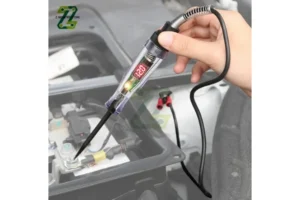
While complex electrical issues may eventually require an oscilloscope or multimeter, 90% of automotive electrical faults—such as a blown fuse or a broken wire—are identified using a simple test light. This probe works by completing a circuit through the internal bulb, giving the technician an immediate visual signal that the circuit is “live.”
Key Technical Features & Semantic Entities:
-
Multi-Voltage Compatibility: Engineered to operate across a 6V–24V DC range, making it equally effective for motorcycles, passenger cars, and heavy-duty commercial vehicles.
-
Sharp Insulation-Piercing Tip: The hardened steel probe is designed to penetrate wire insulation and reach into tight connector pins without causing permanent damage to the harness.
-
High-Visibility Indicator: Features a long-life incandescent bulb or LED that illuminates within the transparent handle. The brightness often varies with the voltage level, helping to identify “weak” power sources.
-
Bi-Directional Testing:
-
Checking for Power: Attach the alligator clip to a known ground (chassis) and touch the probe to the wire.
-
Checking for Ground: Attach the clip to the positive battery terminal and touch the probe to a wire or chassis point to verify a solid ground connection.
-
-
Rugged Construction: Built with an impact-resistant ABS handle and a flexible, heavy-duty lead wire (typically 1–1.5m) to prevent snapping or fraying during repetitive workshop use.
Diagnostic Applications:
| Component | Test Method |
| Fuses | Touch both metal tabs on top of the fuse; if one side lights up and the other doesn’t, the fuse is blown. |
| Light Sockets | Probe the center pin of the socket to verify power delivery from the switch. |
| Short Circuits | Follow the wire path and probe at various intervals to find where power is lost. |
| Relay Triggers | Verify if the trigger signal is reaching the relay coil from the ECU or switch. |
Safety Note: Standard test lights draw a small amount of current. While safe for most circuits, always use a specialized “Computer Safe” (high-impedance) logic probe when testing sensitive ECU, Airbag (SRS), or PCM data lines to avoid damaging delicate microprocessors.